
If you’re missing a tooth, you have a couple of ways to fill the empty space in your teeth. A dental bridge does what the name implies — bridges the gap between the teeth. Let’s explore further.
What is a Dental Bridge?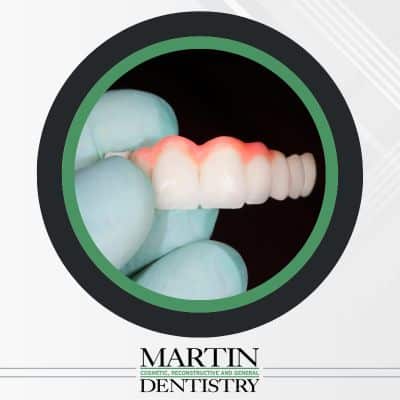
A dental bridge has been used since the early 1900s to replace missing teeth. To build one, your dentist will crown the teeth on either side of the empty space. These are called the anchor or abutment teeth. For the appliance to work effectively, the abutment teeth must be in good condition. This is especially true if a bridge replaces more than one tooth. A pontic — or false tooth — connects the two crowned teeth. It is cemented into place so it stays in position when you eat, drink and speak. The pontic fills the empty space, providing you a tooth that feels natural.
Types of Dental Bridges
There are several different types of dental bridges. Which one will work for you depends on your situation and preference. Here are the four most commonly used ones to replace missing teeth:
Traditional Dental Bridge: This is the most common type, consisting of one or more false teeth (pontics) held in place by dental crowns on adjacent teeth (abutment teeth). It works well when natural teeth are present on both sides of the gap.
Cantilever Dental Bridge: This type is similar to a traditional bridge, but it only requires one abutment tooth next to the gap. It’s typically used when there are adjacent teeth on only one side of the missing tooth.
Maryland Bonded Bridge (Resin-Bonded Bridge): This bridge uses a framework of metal or porcelain wings bonded to the back of adjacent teeth, instead of using crowns. It’s a more conservative option because it requires less alteration of the surrounding teeth.
Implant Supported: An implant-supported bridge is a type of dental bridge that is supported by dental implants rather than natural teeth. It is typically used when several teeth are missing in a row. Instead of being attached to crowns on adjacent natural teeth, this bridge is anchored by implants that are surgically placed into the jawbone.
Each type of bridge is chosen based on the location of the missing teeth, the condition of adjacent teeth, and the patient’s specific needs.
Advantages of a Dental Bridge
A dental bridge offers many advantages. First, they last a long time. If you care for it well, the appliance will last around 15 years. Next, they are lightweight and feel completely natural, thus enhancing your ability to eat and speak comfortably. Last, it requires only two to three visits and requires no sedation or invasive procedures.
Other advantages include:
- They are less expensive than implants.
- They help maintain the shape of your face.
- They prevent other teeth from shifting or moving.
- They correct your bite that a missing tooth will alter.
Why use a Dental Bridge to Fill a Gap in your Smile?
Bridges are preferred over implants in some cases. For example, if your gum line is low or you have a very visible smile line, an implant might not look aesthetically pleasing. This appliance will look more natural.
They also allow you to control the color of multiple teeth. If you have a missing tooth in the front of your mouth, the color of an implant may be off ever so slightly. If you opt for one, the restoration ends up looking more natural.
Additionally, implants require your jaw bone to be intact and healthy. If you don’t have sufficient bone density, an implant will likely require extensive bone grafting.
Finally, implants occasionally fail. In these scenarios, bridges provide a viable alternative to restore a tooth.
Request An Appointment For Your Dental Bridge Today
At Anthony Martin Dentistry, located in Yorktown, VA, we offer dental bridges as an effective and affordable treatment option for patients missing a tooth or teeth. The good news is, if you take excellent care of your dental bridge, they can last up to 10 years. Ask us about our cosmetic dentistry services.